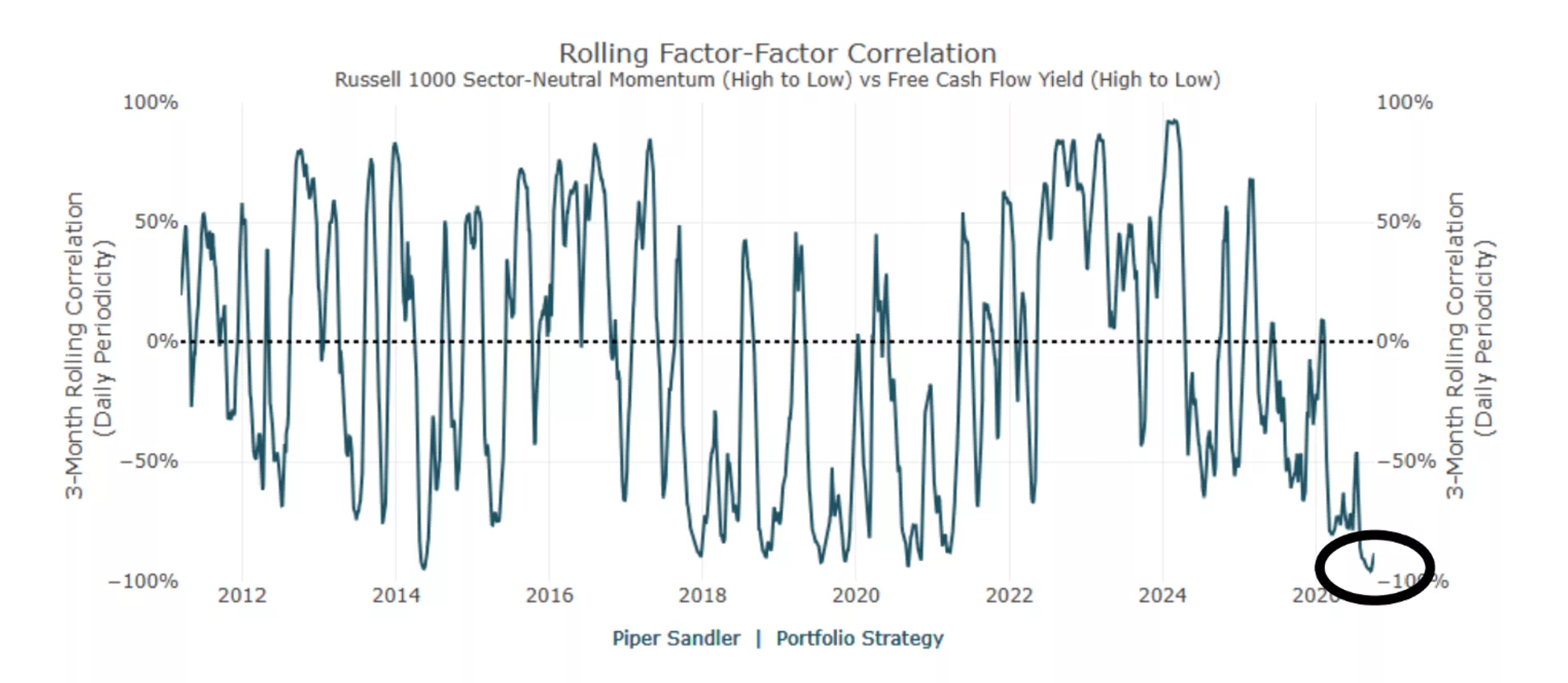
Quality and Price Momentum are at Negative Extremes
Over the past decade, we have sought to provide context for how and why clients’ investments perform as they do amid changing market conditions. As a quality-oriented investment management team, our investment style’s relative performance may ebb and flow during short periods of time, as certain characteristics of the market come in and out of favor.
One area of focus in recent years has been risk as defined by “beta,” with our research suggesting that stocks exhibiting higher volatility often perform differently from quality stocks, which generally carry lower levels of market risk. We believe this is due to the greater stability and predictability in their sales, earnings and cash flow generation.
Over the past 15 months, we’ve seen a historic divergence in performance between quality and the flip side of quality, beta and momentum. The following charts show that recent performance of quality and beta have reached historic extremes in terms of their recent price performance.
As we’ve noted in the past, the definition of “quality” can take on different definitions when using third party sources to gain a perspective on this characteristic. In this measurement above, quality is defined as high amounts of unencumbered cash flow generated by the business, divided by a firm’s value. It appears hard to argue that generating excess cash isn’t positive. This attribute is combined with the traditional return-on-equity measure, where companies with higher returns are generally considered higher quality.
Companies with negative free cash flow (FCF) that are dependent on debt markets to fund their business may find themselves surprised at inopportune times when investors reassess the viability and risks of their business models.
Beta and Price Momentum are at Positive Extremes
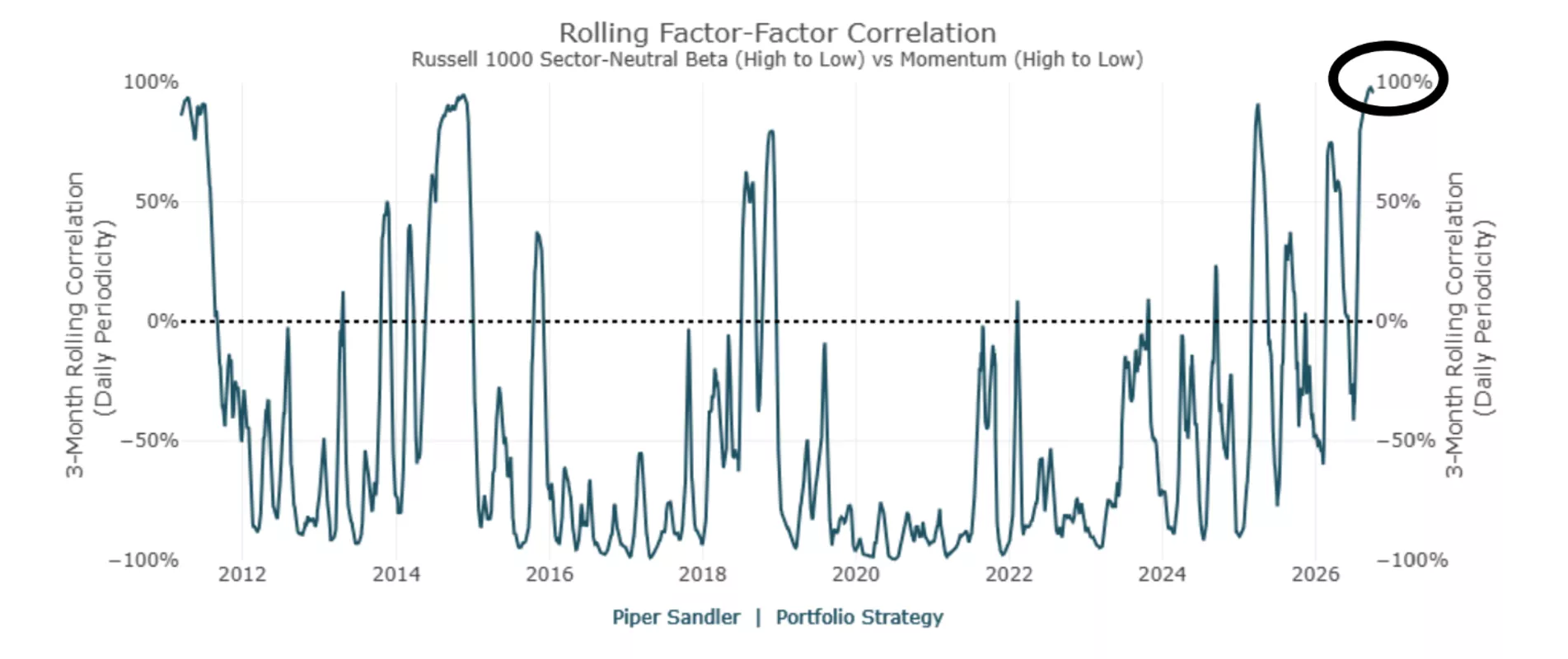
We evaluate quality in the context of not one characteristic, but actively through multiple perspectives. On our investment team, we employ our four-pillar investment framework of high returns on capital combined with strong balance sheets, operating earnings growth and attractive valuations. Consistent with the definition of quality in Piper’s work we also see value in high-quality stocks as measured on free cash flow yield. Where Piper appears to see historic divergences of quality and beta, we see opportunity in quality.
As always thank you for your interest and trust managing your investments.
About the Author

Charles Wittmann, CFA®, Executive Director, joined SCM in 2014 and has investment experience since 1995. Chip is Co-Portfolio Manager of the Equity Income strategy. Prior to joining SCM, he worked for Thompson Siegel & Walmsley as a portfolio manager and (generalist) analyst. Prior to TS&W, he was a founding portfolio manager and analyst with Shockoe Capital, an equity long/short hedge fund. Chip received his B.A. in Economics from Davidson College and his M.B.A. from Duke University's Fuqua School of Business. He holds the Chartered Financial Analyst® designation and served as President of CFA Society Virginia from 2012-2013.
Related Insights
11.17.2026 • Gregory Zage, CFA®
10.29.2026 • Gregory Zage, CFA®
The Sterling Capital VAULT: An Update on FOMC Dissenting Votes: Warsh Edition
10.23.2026 • Peter Brown, CFA®
The Sterling Capital VAULT: The 2026 U.S. Midterm Elections & Fixed Income Market
10.13.2026 • Charles Wittmann, CFA®

